
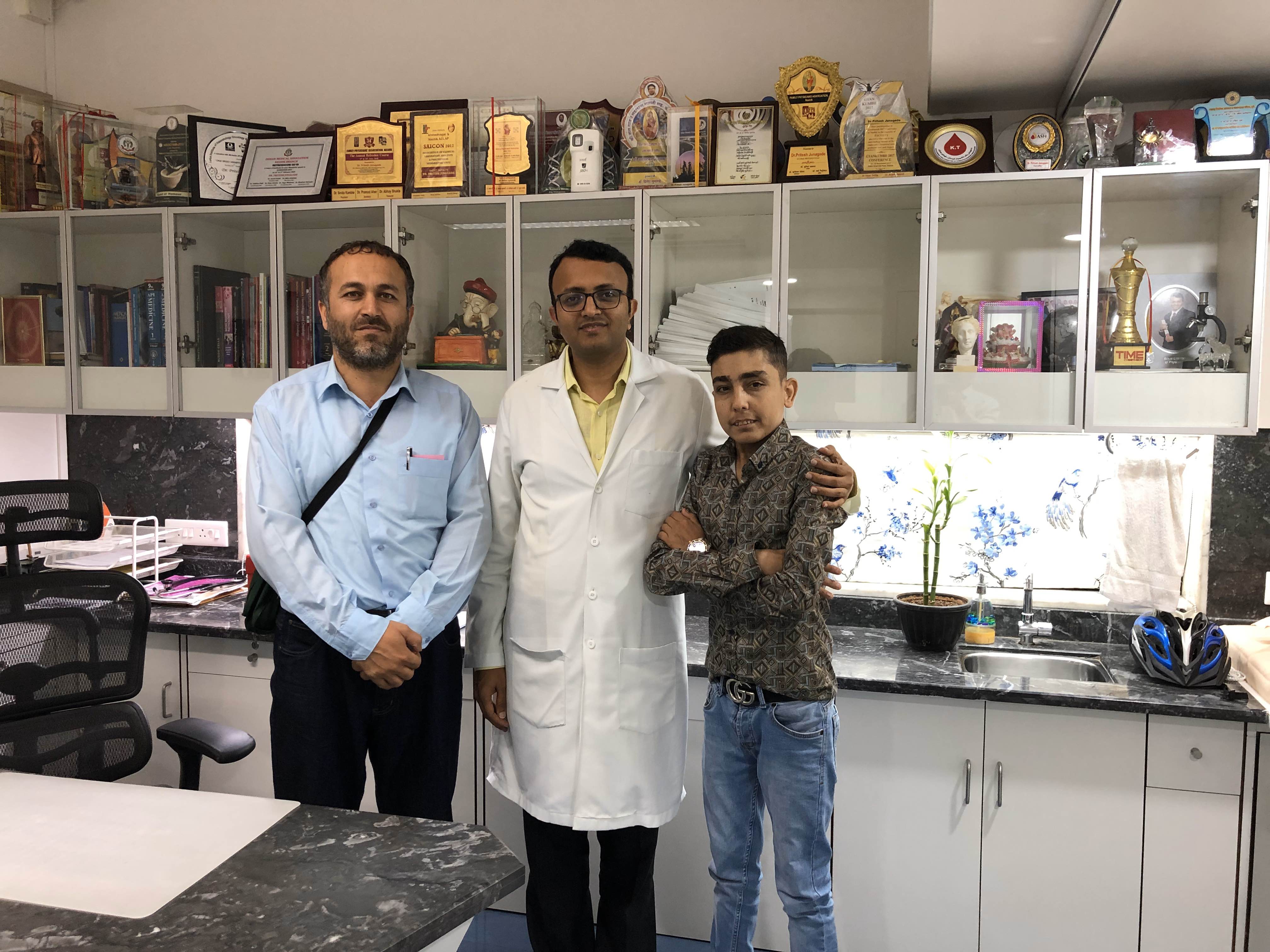
At 15-years-old, Mohammed has more stamps in his passport than his age. But, his trips from his home in IRAQ, KHURDISTHAN, weren’t vacations – they were journeys to search for a cure for his disease.
The IRAQ couple took MOHAMMAD to a hospital for consultation on what the doctor had said. A blood test revealed that Hussein had Thalassemia – an inherited blood disorder that affects the body’s ability to produce hemoglobin and red blood cells.
Thalassemia is a genetic disease that is common in people of Middle Eastern descent; eight percent of people in the UAE are carriers of the defective gene. Mohammed had beta thalassemia major – the most severe form of Thalassemia – which caused him to have low energy and difficulty sitting and standing when his hemoglobin was low.
In order to control the Thalassemia, Mohammad would need monthly Blood transfusion for the rest of his life. “It’s the duty of a father or a mother to make every effort to find treatment for their sick child.
For the next 15years, the Mohammad family travelled the world searching for a cure for Mohammad, the third of their five children. They were thankful to the Khurdisthan government for supporting their quest.
A Iraq government representative contacted Lotus Institute of haematology , Oncology and Bone Marrow Transplant Hospital , Nashik, Maharashtra, India to see if they could treat Mohammad. The answer was – YES!
“The caregivers at Lotus Hospital didn’t treat me like a patient, but like a son.”
Lotus Hospital is one of a few hospitals that offer a unique and novel bone marrow transplant approach Sibling Bone Marrow Transplant– called a that could benefit, Mohammad. Sibling means that donated cells match 6/6h of , Mohammad ’s important genes. Using an innovative technique, , Mohammad would receive the Sibling-matched, donated bone marrow from his Sister , .
Once tests were done, decisions were made and papers were filled out, the family was on a plane to India
“I knew this was an educated family that had been through a lot without any positive results, ” says DR.PRITESH JUNAGADE consultant haematologist in lotus institute of Haematology and oncology and Bone Marrow Transplant. “So, I proposed a new therapy to them; one with potentially less graft-versus-host disease and fewer long-term side effects.”
Mohammad would receive reduced-intensity chemotherapy – or pre-conditioning with chemo – followed by lower doses of the medication. Once the transplant was done, he’d have additional chemo to avoid rejection of the marrow..
Because, Mohammad and his family were from overseas and would be in NASHIK for an extended amount of time, they were connected with LOTUS HOSPITAL – a department dedicated to serving the needs of international patients.
“The caregivers in our department speak many languages, are familiar with the cultural needs of patients from other countries, and help them make NASHIK their home while they’re here for treatment, ” says Dr PRITESH JUNAGADE, . “They often become extended members of our international patients’ families.”
In November 2014, , Mohammad received his bone marrow transplant. “The caregivers at LOTUS HOSPITAL didn’t treat me like a patient, but like a son, ” recalls, Mohammad.
After three months, his bone marrow showed to be 100 percent from his donor. And, at six months, immune-suppression therapy was stopped. Those two factors meant his transplant was a success.
“, Mohammad has the potential to do whatever he wants. He can make an impact because he's going to live a healthy, normal life, ” says Dr. PRITESH JUNAGADE.
His 15year journey proved to MOHAMMAD that “Nothing’s impossible. It’s important not to lose hope or give up. Everything happens according to God’s will.”
Lotus Institute of Haematology, Oncology and Bone Marrow Transplantation