
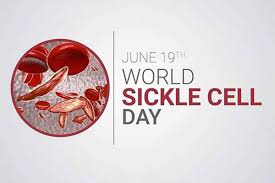
World Sickle Cell Day
The 19th June is World Sickle Cell Day – a day of raising awareness!
What is Sickle Cell ?
Sickle cell disorders are a group of illnesses which affect your red blood cells. Sickle cell is a genetic condition, which means it is passed on from your parents and you are born with it; you cannot catch it from other people.
Sickle cell disorders causes your normally round and flexible blood cells to become stiff and sickle shaped, stopping the blood cells, and the oxygen they carry, from being able to move freely around the body and causing pain. This can cause episodes of severe pain. These painful episodes are referred to as sickle cell crisis. They are treated with strong painkillers such as morphine to control the pain.
People with sickle cell are also at risk of complications stroke, acute chest syndrome, blindness, bone damage
Over time people with sickle cell can experience damage to organs such as the liver, kidney, lungs, heart and spleen. Death can also result from complications of the disorder. Treatment of sickle cell mostly focuses on preventing and treating complications.
Did You Know?
1. SCD is inherited from both parents; sickle cell trait is inherited from one parent.
2. SCD can affect anyone, although it predominantly affects people from African and Caribbean backgrounds..
3. A simple blood test will tell whether you have sickle cell trait or the disorder
4. Children with SCD are at increased risk for stroke, the risk is highest between the ages of 2 and 16.
5. Episodes of pain may occur in sickle cell disorder and are generally referred to as a crisis
6. People living with SCD are in the extremely vulnerable group and have to shield during the coronavirus (COVID-19) pandemic
The only possible cure for the disorder is bone marrow transplant but this is only possible for a limited number of affected individuals who have a suitable donor. A medicine called Hydroxyurea, can significantly reduce the number of painful crises.
The Sickle Cell Trait
Sickle cell trait is inherited when only one of your parents has passed on the sickle gene, and will never develop into sickle cell disorder. You do not have symptoms from sickle cell trait, so it is a good idea to have a blood test to see if you have sickle cell trait. If you have the trait, the majority of red cells in the blood are normal round shaped cells. Some sickle shaped cells may be present under certain conditions.
The trait is not an illness, but if you are planning to have children, then certain factors have to be considered.
If your partner does not have sickle cell trait, then any children you have will not have sickle cell disorder, but they could have the trait (50% chance).
If you and your partner both have the trait, there is a 25% chance that any child conceived may have sickle cell disorder and 50% chance they will have the trait.